Skip these and you'll be picking thorns out of your hands for a week
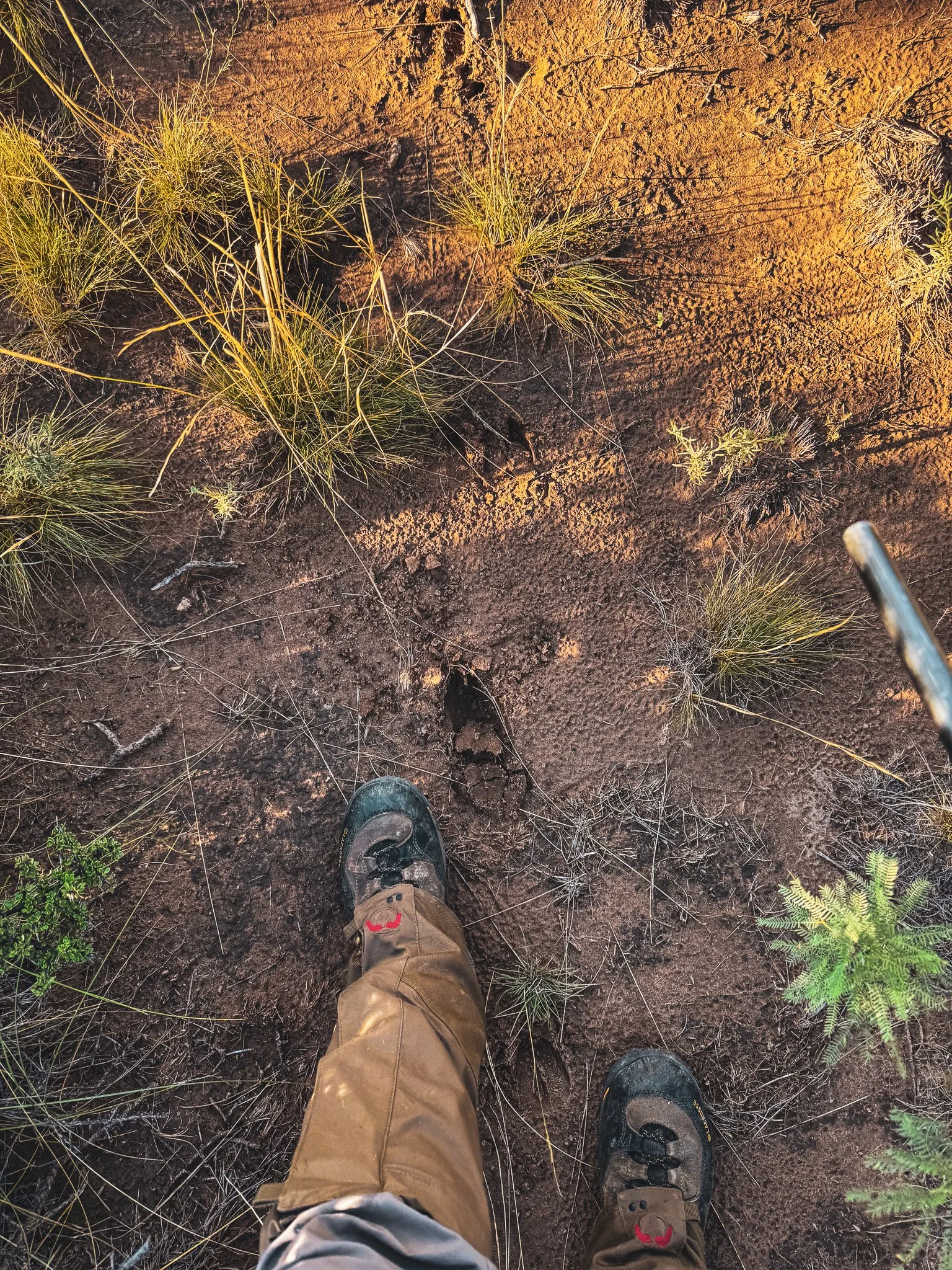
Lacrosse Ursa ES Boots and Gaiters are my go-to combo in Argentina.
I've hunted a lot of places. I've also made a lot of gear mistakes. Argentina has a specific way of punishing hunters who pack like they're going on a Colorado elk hunt — because it's not. The terrain at Terra Pampa will eat through cheap gear, stick you with thorns you didn't see coming, and soak your boots in the morning before you've even found a stag.
Here's what actually matters in your pack.
1. Gaiters — Non-Negotiable, Full Stop
If there's one item on this list that will make or break your trip from day one, it's gaiters. The El Sucio — the thick, brushy side of Terra Pampa — is absolutely loaded with thorns. We're talking stickers that'll go through cheap fabric like it's not there. And out on the open pampa, rosetta goat-head stickers cover the ground in patches that will work their way into your socks, your boots, and eventually your patience within the first hour.
Low-cut gaiters aren't enough here. You want a mid to full-height gaiter that seals your boot-to-pant gap completely. If you're walking through El Sucio without them, you will come back to the truck every single afternoon picking thorns out of your lower legs like a cactus got personal with you.
Brands I'd trust: Outdoor Research, Stone Glacier, or whatever bomber gaiter you already own from elk hunting. Bring them. Wear them every day.
2. Durable Pants — Leave the Lightweight Stuff at Home
This is not a hunt where you want your favorite ultralight hiking pants. The brush in El Sucio doesn't care what your pants cost — it will shred anything that isn't built for it. You need a pant with real abrasion resistance in the lower leg and seat at minimum.
Think along the lines of a stretchy ripstop nylon construction. If you're an Argali guy, their Vesper or Torex pants built for the west will do just fine here, depending on how hot you run or not. The new Kifaru Passbreaker Pants also held up well for me in Argentina. The goal is a pant that can take repeated contact with thorny brush without blowing out after day two.
Temperatures at Terra Pampa run a lot like a September or October day in the U.S. — mornings start around 40 degrees, afternoons can push into the mid-80s, and the later into April you hunt, the more it starts to feel like early October back home. A midweight pant hits the sweet spot. You don't need insulated bottoms, but you also don't need to be in summer-weight trail pants because they won’t last or protect you from the pokeys.
3. Work Gloves — Your Hands Will Thank You
This one catches people off guard. You're not thinking gloves for a warm-weather hunt. But when you're reaching into the brush to work through El Sucio, pulling thorns off your pants, or handling an animal on the ground, today’s American bare hands can be a liability.
A simple pair of leather work gloves — the kind you'd grab at a ranch supply store — is exactly what you need. Nothing fancy. They don't need to be insulated, they don't need to be hunting specific. They just need to be tough enough to keep a three-inch thorn from going through your palm when you grab a branch to steady yourself on a stalk.
Pack them in your daypack and pull them out when you're moving through the thick stuff. You'll use them every single day in El Sucio.
4. A Soft Shell Outer Layer — Not a Puffy
This is where a lot of western hunters over-pack. You're going to Argentina in late March or April and you see 40 degrees on the weather forecast and immediately start thinking insulated jacket. Don't.
You don't need a puffy. You won't want a puffy. By 9 a.m. you'll be peeling layers on the open pampa, and a down or synthetic insulated jacket will have you sweating through your base layer before the morning hunt is half over. Leave it at home.
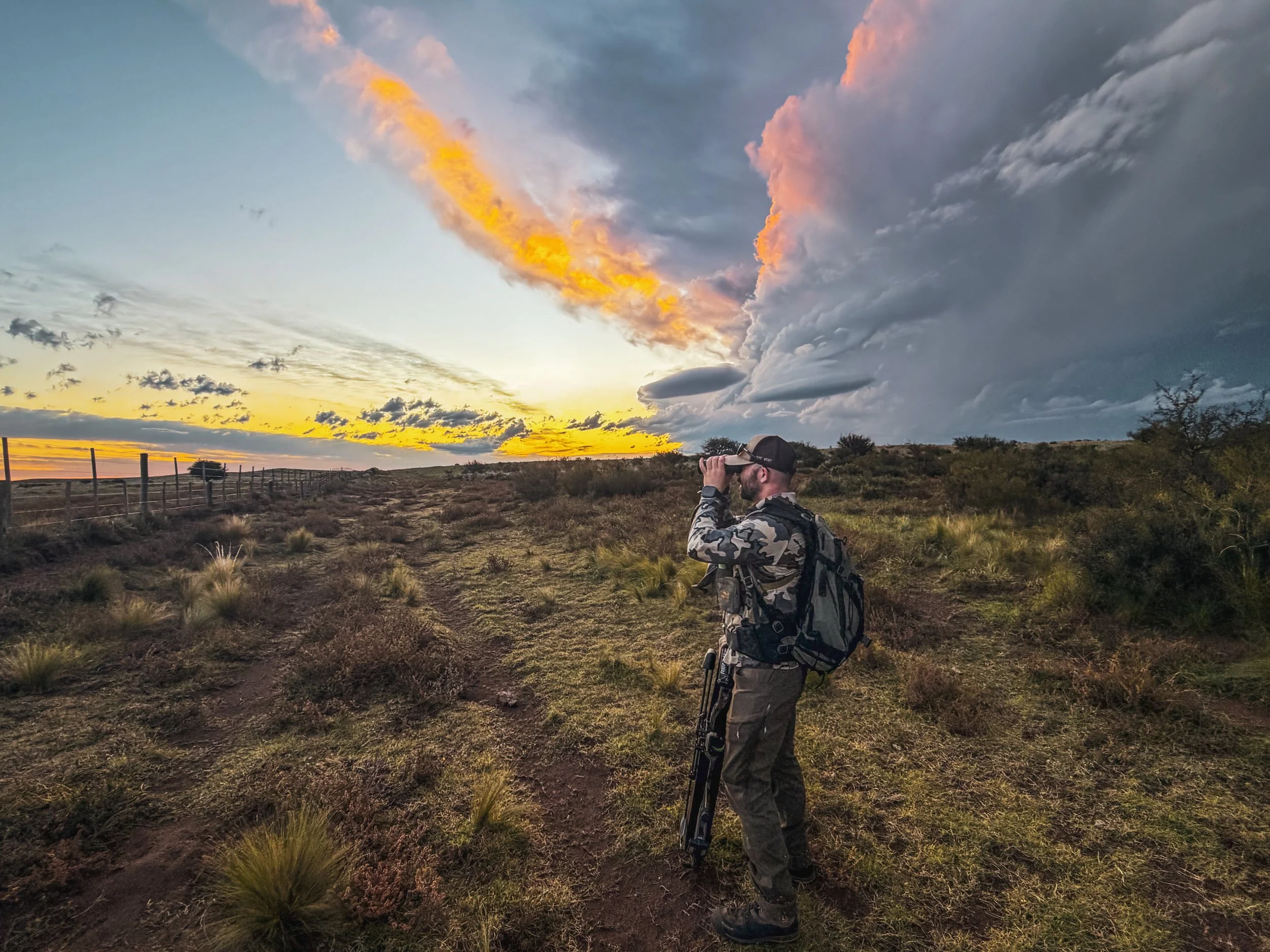
What you do need is a soft shell — a wind-resistant, lightly insulated or fleece-backed layer that takes the edge off a cool morning and handles the occasional sprinkle without soaking through. Argentina's weather in the rut window is unpredictable in the best way. You'll get bluebird mornings, overcast glassing days, and the random light rain shower that rolls through and disappears by noon. A good soft shell handles all of it without making you miserable when it warms up.
Think First Lite Corrugate Jacket, Kuiu Guide PRO, or any comparable soft shell you already trust. Layered over a lightweight base, it's all you'll need from first light until the sun gets up.
5. Boots Built for Thorns and Wet Grass — Not the Backcountry
Your stiff-shanked, mountaineering-inspired elk boots are probably overkill here. Argentina is not technical terrain. You're not climbing scree fields or doing 20-mile backcountry days - it’s more like 10-12 miles of rolling hills. What you are doing is covering ground through wet morning grass, poking through thorn-laden brush, and walking the open pampa all afternoon.
What you want is a mid to full-height leather or synthetic hunting boot with a solid rand, a waterproof membrane for morning dew, and enough flexibility to be comfortable walking all day on relatively flat to rolling ground. Think something in the Lacrosse Ursa ES, or Crispi Lapponia family — a boot that's tough enough to shed thorns on the lower upper but doesn't wear you out by 2 p.m. because it weighs four pounds per foot.
Pair it with your gaiters and you're set for whatever the sucio throws at you.
The Argentina Packing Philosophy
Here's the honest summary: pack like you're going hunting in the Southwest in September. Layers you can shed, durable fabric that won't blow out in the brush, protection for your hands and lower legs, and a soft shell for the mornings. You don't need extreme cold-weather gear. You don't need your heaviest boots. And you definitely don't need a puffy jacket taking up half your bag.
What you need is gear that can take a beating from thorns, stay comfortable across a 40-degree temperature swing in a single day, and not slow you down when a stag is feeding at 400 yards and you've got one shot to close the distance.
Get that right and you can focus on the hunting — which, trust me, is worth every bit of the prep.
Have questions about gearing up for Argentina or want to learn more about the trips? Click here to read about the logistics, hunting, and more »
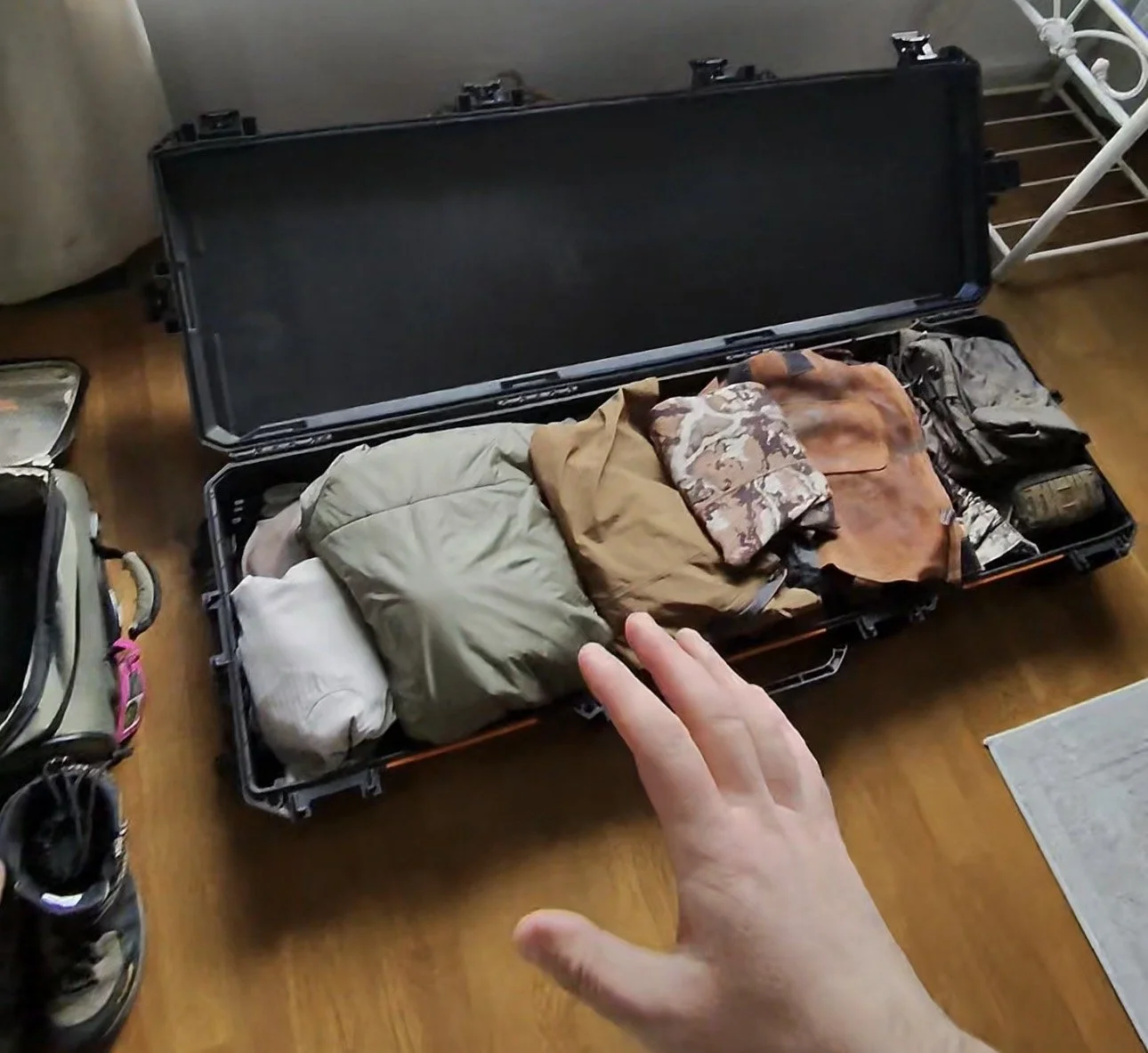
Packing in a bow or rifle case (if you’re bringing your own) can save on weight and bags at the airport.